During the 1st semester this year I attended a module on ornithology. One of the lectures on the module focused its attention on bird flight and its principles.
The lecturer started by posing the general idea of what is needed for a bird to be able to fly and what forces are involved in flying: Lift, Drag, Thrust and Gravity. She then started describing with perfect examples how the wings and body of birds are perfectly shaped to overcome gravity and drag, allowing them to fly.
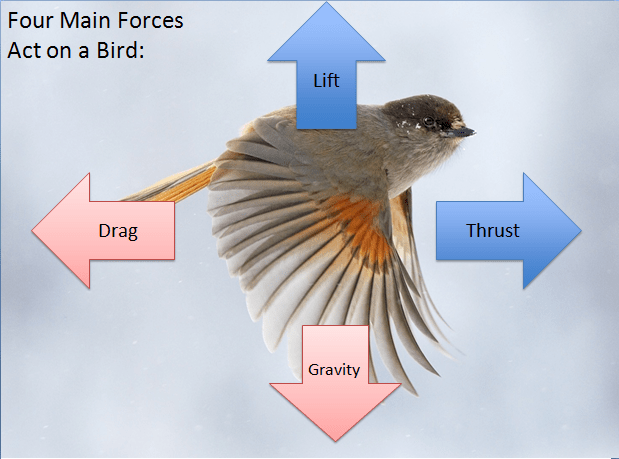
She described how Bernoulli’s principle applies to bird flight to help producing lift through the wing camber (the particular shape of the wing), how birds use flapping both to produce lift and thrust and how the angle at which the wing encounters the air flow influences the lift production (angle of attack).
After talking about lift she started to describe the different types of drag that birds need to deal with when flying and how their wings and bodies have evolved to overcome these obstacles.
She described how slotted wingtips and narrower wings help reduce induced drag and how the tail and body-shape also help reduce friction and parasite drag.
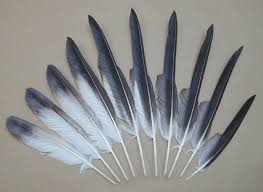
Finally she moved her attention on two particular types of flying that do not require much of the actual flapping of the wing and that are more common in marine birds and vultures: gliding and soaring.
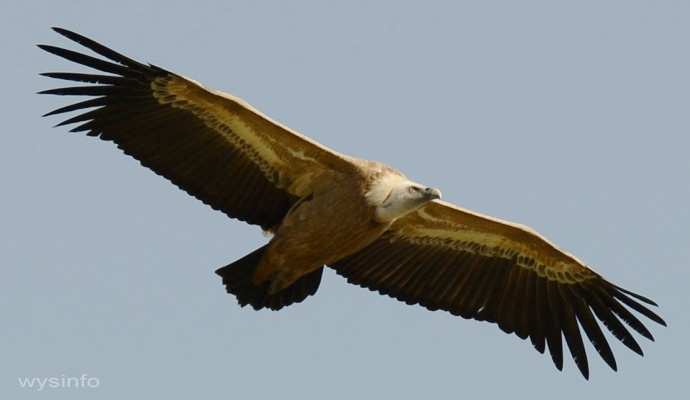
She explained how some birds in particular use gravity to their advantage to be able to glide and cover long distances without wasting energy. Additionally she explained how soaring birds harness the energy from the environment to produce lift, focusing particularly on acclivity (currents that encounter a cliff and are forced upward) and thermal air currents (warmer air currents are less dense and tend to create a vertical air flow).

She then briefly described gradient soaring used by sea birds to fly over the ocean, explaining how the air currents closer to the sea surface usually move slower than the air currents on top.
Final Opinions
I was fascinated by this lecture thanks to our lecturer being able to not only give us the necessary information on the topic, that I already found interesting, but also to transmit her passion over the physics behind bird flight.
I found useful being able to associate the birds physical structure to their flight behavior and, thanks to that particular lecture, to make a comparison between different birds, their shape and their flight behavior.
 Wild Nature